

-
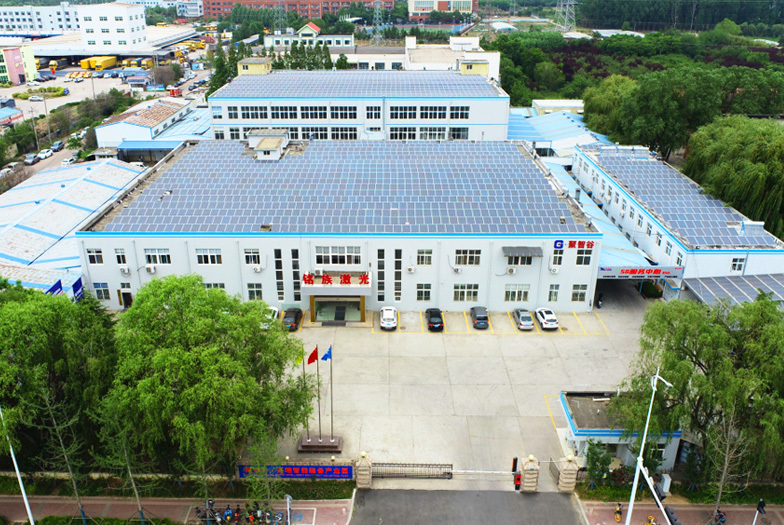
About UsEstablished in 2010, it is the first independent laser brand in Qingdao to integrate research and development, production, and sales of laser equipment.
 КонтактыТелефон службы:+86-400-9988-709
Почтовый ящик:Leo@qdmingzu.com
Почтовый ящик:Info@qdmingzu.com
Адрес:улица Янъян, 97, район Ченьян, Циндао -
ProductsEstablished in 2010, it is the first independent laser brand in Qingdao to integrate research and development, production, and sales of laser equipment.
 КонтактыТелефон службы:+86-400-9988-709
Почтовый ящик:Leo@qdmingzu.com
Почтовый ящик:Info@qdmingzu.com
Адрес:улица Янъян, 97, район Ченьян, Циндао -
Case CenterEstablished in 2010, it is the first independent laser brand in Qingdao to integrate research and development, production, and sales of laser equipment.
 КонтактыТелефон службы:+86-400-9988-709
Почтовый ящик:Leo@qdmingzu.com
Почтовый ящик:Info@qdmingzu.com
Адрес:улица Янъян, 97, район Ченьян, Циндао -
TechnicalEstablished in 2010, it is the first independent laser brand in Qingdao to integrate research and development, production, and sales of laser equipment.
 КонтактыТелефон службы:+86-400-9988-709
Почтовый ящик:Leo@qdmingzu.com
Почтовый ящик:Info@qdmingzu.com
Адрес:улица Янъян, 97, район Ченьян, Циндао -
NewsEstablished in 2010, it is the first independent laser brand in Qingdao to integrate research and development, production, and sales of laser equipment.
 КонтактыТелефон службы:+86-400-9988-709
Почтовый ящик:Leo@qdmingzu.com
Почтовый ящик:Info@qdmingzu.com
Адрес:улица Янъян, 97, район Ченьян, Циндао

A Powerful Tool for Cost Reduction and Efficiency Improvement: How Handheld Laser Welding Machines Can Boost Workshop Productivity
Release time:
2026-02-09
In today’s increasingly competitive manufacturing landscape, enhancing workshop productivity and reducing operational costs have become enduring goals for every enterprise. The emergence of handheld laser welding machines has brought about a technological revolution in traditional welding workshops, truly making them an “effective tool for cost reduction and efficiency improvement.” This article will explore in depth how handheld laser welding machines can comprehensively boost workshop productivity from multiple perspectives.
I. The Efficiency Revolution: A Quantum Leap in Welding Speed and Quality
Traditional welding methods, such as argon arc welding and shielded metal arc welding, often require frequent electrode or wire replacements and are limited by the operator’s skill level and physical strength. Handheld laser welders, on the other hand, use a high-energy-density laser beam as the heat source, enabling a significant increase in welding speed—typically two to five times faster than conventional methods.
More importantly, it ensures exceptional weld quality even during high-speed welding. Laser welding features a small heat-affected zone, a high depth-to-width ratio of the weld, and minimal distortion, significantly reducing the need for subsequent correction and grinding operations. Many users have reported that welding tasks that previously required multiple steps can now be completed in a single pass, cutting overall processing time by 30% to 60%.
II. Cost Reconstruction: A Comprehensive Reduction from Direct Costs to Implicit Costs
The cost advantage of handheld laser welding machines is not only evident in the visible savings on materials but also lies in the substantial reduction of a range of hidden costs:
Material cost savings No need for conventional consumables such as welding wires or shielding gases (for some models); power consumption is significantly lower than that of traditional welding equipment.
Labor Cost Optimization The operational threshold has been lowered, enabling ordinary workers to master basic operations in the short term and reducing their reliance on expensive, skilled welders.
The rework rate has dropped significantly. High-precision welding significantly reduces the defect rate, thereby avoiding product scrap or rework caused by poor welding quality.
Reduction of auxiliary processes Due to minimal thermal deformation, in many cases there is no need for, or a significant reduction in, subsequent processes such as reshaping, grinding, and polishing.
Equipment maintenance simplified Compared to traditional welding machines, laser welding machines have a simpler structure, lower maintenance costs, and reduced downtime.
Overall calculations show that workshops using handheld laser welding machines can reduce long-term welding costs by more than 40%.
3. Flexibility Upgrade: Breaking the Constraints of Space and Workpieces
Traditional welding workstations are typically fixed, requiring large workpieces to be moved to the welding station. The portable design of handheld laser welders has completely transformed this approach—these devices can be easily moved right next to the workpiece, making them particularly well-suited for welding large structures, on-site repairs, or components that are difficult to move.
This flexibility not only saves time and costs associated with material handling but also makes the workshop layout more efficient—eliminating the need to equip each welding area with fixed equipment and significantly improving space utilization.
4. Democratization of Skills: Reducing Dependence on Specific Highly Skilled Workers
Traditional high-quality welding heavily relies on the welder’s experience and skill, and it often takes several years to train a skilled welder. Handheld laser welding machines significantly reduce operational difficulty by providing intelligent assistance features—such as weld seam tracking and automatic parameter adjustment, which are available on some models.
New employees can perform high-quality welding work after only a short period of training, which effectively alleviates the widespread “skilled-labor shortage” problem faced by the manufacturing industry and also makes human resource allocation more flexible.
V. Environment and Safety: Creating a Better Workshop Environment
During operation, the handheld laser welding machine produces significantly less visible arc, smoke, dust, and spatter. This not only improves air quality in the workshop and reduces the capital investment and operating costs of smoke and dust removal equipment but also greatly enhances operational safety. Operators no longer need to wear bulky protective gear, which lightens their workload, reduces fatigue, and indirectly boosts both efficiency and work endurance.
6. Intelligent Integration: Embracing the Smart Workshop of the Future
Modern handheld laser welding machines are gradually evolving toward智能化 (smartification). They can be connected to factory MES systems, enabling real-time recording of welding parameters, operation times, and other data, thereby providing precise data support for production management. This data-driven capability helps companies optimize welding processes, analyze production capacity, and implement predictive maintenance—shifting from experience-based decision-making to data-driven decision-making.
Application Example: The Transformation Results of a Metalworking Workshop
After introducing handheld laser welding machines, a medium-sized metal structural component processing plant achieved the following within six months:
The total duration of the welding process is reduced by 45%.
Welding-related material costs reduced by 60%.
The first-pass yield of the product has increased from 87% to 98%.
The training period for new welders has been shortened from 6 months to 1 month.
The concentration of welding fumes in the workshop has dropped by 70%, and the environment has visibly improved.
Conclusion: It’s not just a tool upgrade—it’s a shift in the productivity paradigm.
The handheld laser welding machine brings not only a replacement of welding tools but also a revolutionary transformation of workshop production models. By leveraging advanced technology, it addresses the efficiency bottlenecks, cost challenges, and reliance on specialized talent inherent in traditional welding processes, thereby shifting the welding operation from being a “bottleneck in the manufacturing process” to a “highly efficient and seamless value-added step.”
For manufacturing enterprises seeking transformation and upgrading, investing in handheld laser welding machines is not merely the purchase of a new piece of equipment—it’s an investment in a more efficient, cost-effective, and sustainable productivity system. In the wave of intelligent manufacturing, technologies like these—capable of directly and comprehensively enhancing workshop-level productivity—are becoming a key pillar for companies to build their core competitiveness.
In the future, as laser technology continues to advance and costs decline, handheld laser welding machines are expected to become as ubiquitous as today’s power tools, emerging as an indispensable standard fixture in modern workshops and continuously driving the manufacturing industry toward higher quality, greater efficiency, and enhanced flexibility.

Tiktok QR code
Service Phone:+86-400-9988-709
Address: No.97 YanYang Road, ChengYang District, Qingdao City
COPYRIGHT © 2023 MINGZU LASER TECH CO.,LTD ALL RIGHTS RESERVED