

-
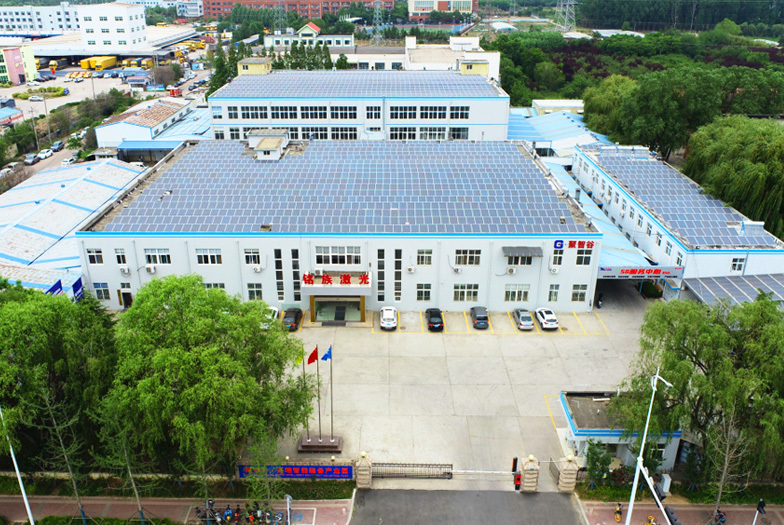
About UsEstablished in 2010, it is the first independent laser brand in Qingdao to integrate research and development, production, and sales of laser equipment.
 КонтактыТелефон службы:+86-400-9988-709
Почтовый ящик:Leo@qdmingzu.com
Почтовый ящик:Info@qdmingzu.com
Адрес:улица Янъян, 97, район Ченьян, Циндао -
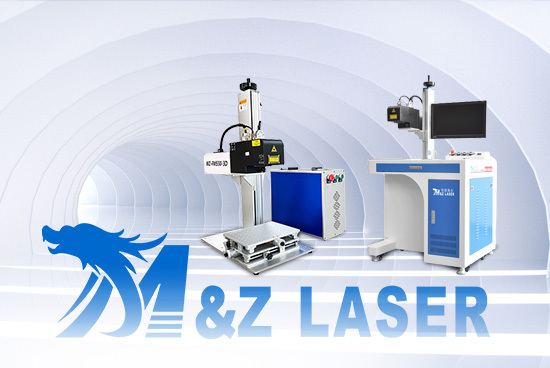
ProductsEstablished in 2010, it is the first independent laser brand in Qingdao to integrate research and development, production, and sales of laser equipment.
 КонтактыТелефон службы:+86-400-9988-709
Почтовый ящик:Leo@qdmingzu.com
Почтовый ящик:Info@qdmingzu.com
Адрес:улица Янъян, 97, район Ченьян, Циндао -
Case CenterEstablished in 2010, it is the first independent laser brand in Qingdao to integrate research and development, production, and sales of laser equipment.
 КонтактыТелефон службы:+86-400-9988-709
Почтовый ящик:Leo@qdmingzu.com
Почтовый ящик:Info@qdmingzu.com
Адрес:улица Янъян, 97, район Ченьян, Циндао -
TechnicalEstablished in 2010, it is the first independent laser brand in Qingdao to integrate research and development, production, and sales of laser equipment.
 КонтактыТелефон службы:+86-400-9988-709
Почтовый ящик:Leo@qdmingzu.com
Почтовый ящик:Info@qdmingzu.com
Адрес:улица Янъян, 97, район Ченьян, Циндао -
NewsEstablished in 2010, it is the first independent laser brand in Qingdao to integrate research and development, production, and sales of laser equipment.
 КонтактыТелефон службы:+86-400-9988-709
Почтовый ящик:Leo@qdmingzu.com
Почтовый ящик:Info@qdmingzu.com
Адрес:улица Янъян, 97, район Ченьян, Циндао

Save on the welder’s wages—then you can afford it! This handheld laser welder produces smooth, glare-free welds that won’t distort thin sheets.
Release time:
2026-04-29
In many hardware processing, stainless-steel fabrication, and sheet-metal workshops, there is one position that may seem unremarkable but consistently poses a headache: the grinding technician.
As soon as one weld seam is completed, it must be ground down. The slag, spatter, and blackened oxidation marks left by traditional welding all require the welder to painstakingly refine them again and again with a grinding wheel. Not only is this labor-intensive, but it also puts the artisan’s skill to the test. Even more importantly, wages for grinders have been rising year after year, while younger workers are increasingly reluctant to take on this dirty, physically demanding job that generates significant noise and dust. Many employers know full well: the grinding step is eating into what was already a thin profit margin.
Is there any way to skip this step altogether?
Finished product immediately after welding, polished to become history.
The advent of handheld laser welding machines has brought about the most direct improvement: a dramatic leap in weld quality.
Conventional argon arc welding relies on weld pool filling, resulting in a rough surface and oxide scale at the edges that must be ground down before proceeding to the next process. In contrast, handheld laser welding machines use a high-energy-density beam for deep-penetration welding, producing smooth, uniform weld beads with a fine, aesthetically pleasing fish-scale pattern or flat weld seam. After welding, the workpiece surface is clean, free of spatter, and shows no noticeable weld bumps or protrusions.
What does this mean? It means that once welding is complete, there’s no need to wait for the grinding technician to schedule a slot or run the workpiece through the grinder again—assembly or delivery can proceed directly. The savings extend beyond the grinding technician’s labor costs to include the time spent transporting workpieces back and forth, the expense of grinding consumables, and the irritating noise of grinding wheels in the workshop.
Thin-plate welding no longer “burns through”
Thin-plate welding has long been a challenging issue in the industry. The thinner the material, the more prone traditional welding methods are to problems: even a slight miscalibration of the current can result in a burn-through, while excessive heat input can cause the entire plate to warp into a wave-like deformation. In contrast, handheld laser welders excel precisely in thin-plate applications.
Laser energy is highly concentrated, resulting in an extremely small heat-affected zone and preventing heat from spreading outward during welding. Even thin sheets less than the size of a business card can be welded securely without causing discoloration on the back side or collapse on the front. After welding, thermal distortion is virtually undetectable, and the workpiece retains its original flatness. For manufacturers producing thin-sheet enclosures, stainless-steel door frames, display cabinets, ductwork, sinks, and similar products, this solution is practically tailor-made for thin-sheet applications.
The overall cost is actually lower.
Some may wonder: Is a handheld laser welding machine really that expensive? However, when you take a holistic view, you’ll find that it actually helps business owners save money.
In the past, employing a grinding technician entailed substantial fixed annual costs—covering wages, social security contributions, room and board, consumables, and year-end bonuses. By contrast, a handheld laser welding machine requires no years of experience to operate; unlike grinding technicians, it is much easier to recruit. Even an ordinary production worker can master the basics in just a few days and produce high-quality welds. More importantly, once welding is complete, no further grinding is needed. What used to require three workers—one to weld, one to grind, and one to clean up—can now often be handled by a single operator, who can accomplish most of the work.
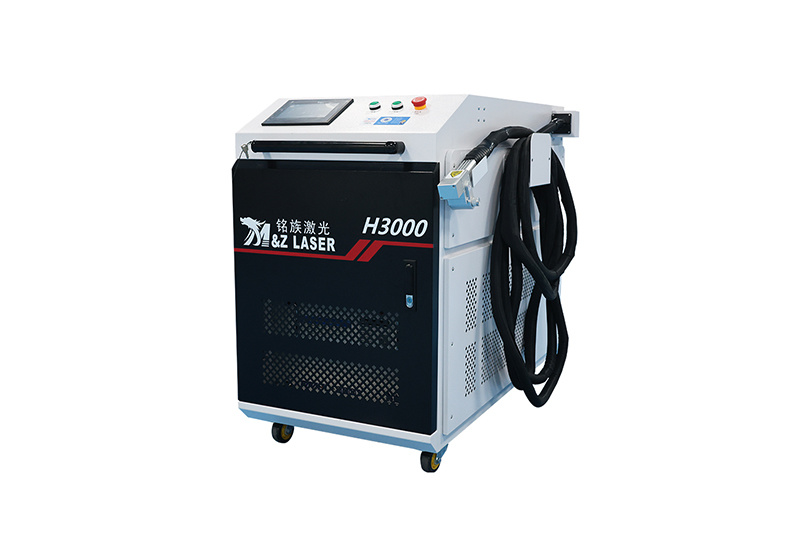
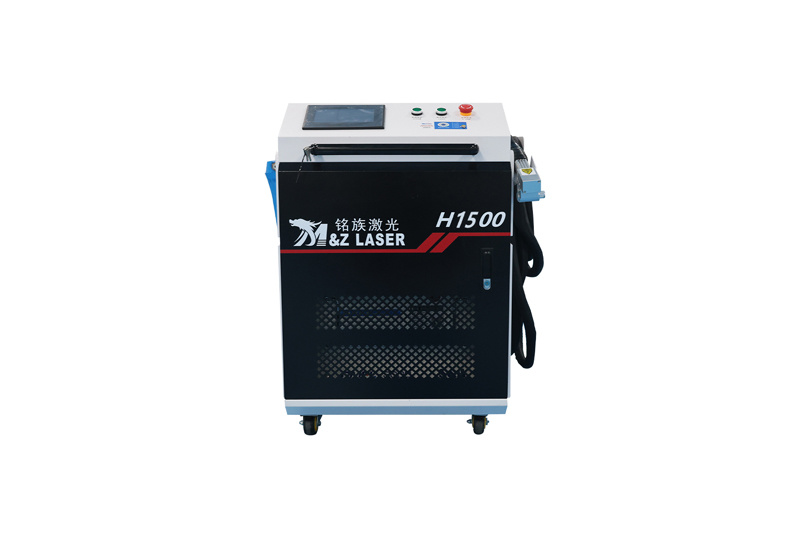

The savings on polishing labor costs alone are enough to cover the equipment investment. What’s more, the equipment can last for several years, becoming increasingly cost-effective the longer it’s used.
The workshop environment has also improved.
The grinding process is accompanied by dust, noise, and safety hazards. In contrast, handheld laser welding machines produce no intense glare (which can be easily mitigated with protective goggles), no harsh grinding-wheel noise, and no airborne metal dust. As a result, the workshop becomes quieter and cleaner, employee comfort improves, and recruitment becomes easier.
It’s not just a tool—it’s a transformation of the mode of production.
The handheld laser welding machine delivers far more than just a new tool—it offers a comprehensive solution that boosts efficiency and reduces costs. It eliminates the need for post-weld repair, prevents thin sheets from warping and being scrapped, and relieves managers of the headache associated with grinding operations.
If you’re still struggling with high labor costs, difficult management, and low efficiency in post-weld grinding, consider taking a close look at handheld laser welding machines.
Saving the salary of one polishing technician translates into a smoother production line, more consistent product quality, and a more worry-free business.

Tiktok QR code
Service Phone:+86-400-9988-709
Address: No.97 YanYang Road, ChengYang District, Qingdao City
COPYRIGHT © 2023 MINGZU LASER TECH CO.,LTD ALL RIGHTS RESERVED