
-
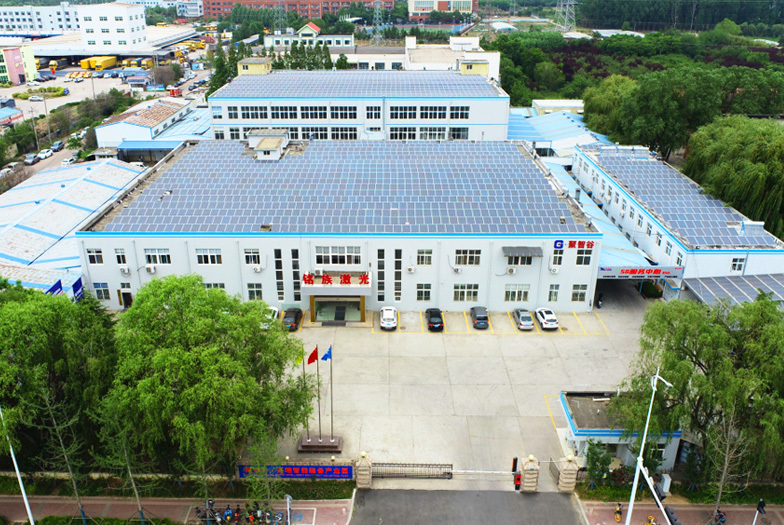
About UsEstablished in 2010, it is the first independent laser brand in Qingdao to integrate research and development, production, and sales of laser equipment.
 КонтактыТелефон службы:+86-400-9988-709
Почтовый ящик:Leo@qdmingzu.com
Почтовый ящик:Info@qdmingzu.com
Адрес:улица Янъян, 97, район Ченьян, Циндао -
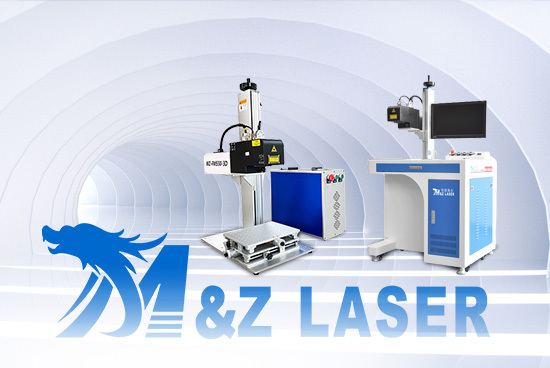
ProductsEstablished in 2010, it is the first independent laser brand in Qingdao to integrate research and development, production, and sales of laser equipment.
 КонтактыТелефон службы:+86-400-9988-709
Почтовый ящик:Leo@qdmingzu.com
Почтовый ящик:Info@qdmingzu.com
Адрес:улица Янъян, 97, район Ченьян, Циндао -
Case CenterEstablished in 2010, it is the first independent laser brand in Qingdao to integrate research and development, production, and sales of laser equipment.
 КонтактыТелефон службы:+86-400-9988-709
Почтовый ящик:Leo@qdmingzu.com
Почтовый ящик:Info@qdmingzu.com
Адрес:улица Янъян, 97, район Ченьян, Циндао -
TechnicalEstablished in 2010, it is the first independent laser brand in Qingdao to integrate research and development, production, and sales of laser equipment.
 КонтактыТелефон службы:+86-400-9988-709
Почтовый ящик:Leo@qdmingzu.com
Почтовый ящик:Info@qdmingzu.com
Адрес:улица Янъян, 97, район Ченьян, Циндао -
NewsEstablished in 2010, it is the first independent laser brand in Qingdao to integrate research and development, production, and sales of laser equipment.
 КонтактыТелефон службы:+86-400-9988-709
Почтовый ящик:Leo@qdmingzu.com
Почтовый ящик:Info@qdmingzu.com
Адрес:улица Янъян, 97, район Ченьян, Циндао

Zero Consumables, No Damage to the Substrate: How Fiber Laser Cleaning Is Revolutionizing Traditional Rust-Removal Processes
Release time:
2026-04-03
In the fields of industrial manufacturing and equipment maintenance, rust removal has always been a fundamental yet critical task. From large steel structures and ship decks to precision molds and historical artifacts, rust on metal surfaces not only detracts from appearance but also progressively degrades material strength and shortens equipment service life. However, conventional rust-removal processes have long been plagued by two core challenges: soaring consumable costs and the unavoidable risk of substrate damage.
Today, the mature application of fiber laser cleaning technology is fundamentally breaking this impasse.
The Hidden Costs of Traditional Rust Removal
Mechanical grinding, sandblasting, and chemical pickling—these rust-removal methods, which have been used for decades, may appear mature and reliable, but in reality they entail significant overall costs.
Mechanical grinding requires frequent replacement of consumables such as grinding wheels, sandpaper, and wire brushes, and it struggles to effectively treat complex curved surfaces and grooved areas. While sandblasting offers higher efficiency, it consumes large quantities of abrasive media and generates substantial dust and waste, necessitating a dedicated recycling and disposal system. Chemical pickling, on the other hand, faces significant challenges in managing spent etching solutions, with mounting environmental regulatory pressures.
More critically, all three methods inevitably cause damage to the substrate. Grinding wheels and sandblasting remove a layer of the base material, leading to dimensional deviations in the workpiece; acid pickling can induce hydrogen embrittlement, thereby compromising the mechanical properties of the metal. For precision components or thin-walled structures, such damage is often irreversible.
Working Principle of Fiber Laser Cleaning
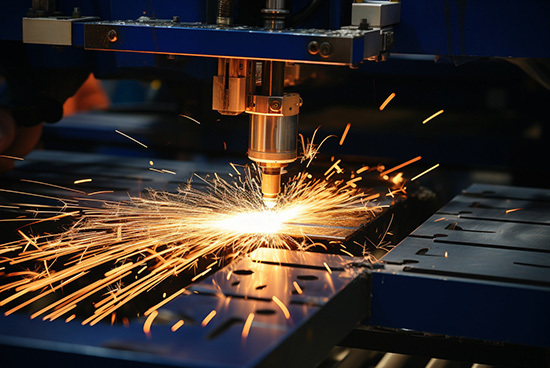
Fiber laser cleaning employs pulsed laser beams to irradiate metal surfaces. Contaminants such as rust, oil, and coatings absorb the laser energy, causing them to vaporize instantaneously or expand thermally and peel off, while the underlying dense metal substrate, due to its high reflectivity and rapid thermal conductivity, absorbs almost no energy.
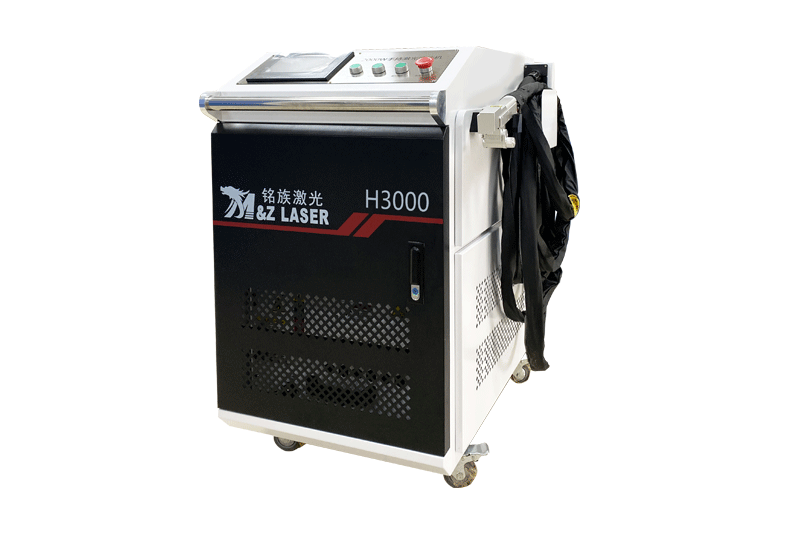
This process requires no chemical agents, abrasives, or grinding tools. Laser energy is delivered via optical fiber and precisely directed to the designated area by a galvanometer scanning system, allowing operators to complete the task using a handheld cleaning head or an automated robotic arm.
Direct Benefits of Zero Consumables
“Zero consumables” is not a marketing buzzword; it represents a genuine transformation of the cost structure.
In traditional processes, abrasive materials, grinding wheels, chemical agents, wastewater treatment, and dust collection all represent ongoing operational expenses. As work volume increases, these costs rise linearly—or even exponentially. In contrast, fiber laser cleaning requires only an electricity supply, and once the equipment is purchased, there are virtually no consumable costs.
This cost advantage is particularly pronounced in large-scale, continuous-operation settings—such as shipbuilding and repair, bridge maintenance, and pipeline construction. Operators no longer need to frequently procure abrasive sand, manage waste sand, replace grinding wheels, or incur additional expenses for hazardous-waste disposal.
Process Advantages of Non-Damaging Substrates
In the field of industrial cleaning, “thorough cleanliness” is never the sole criterion. The true measure of process excellence lies in the ability to remove contaminants while fully preserving the substrate’s original condition.
Fiber laser cleaning, with its precise energy control, enables selective removal. Operators can adjust the laser power, pulse frequency, and scan speed according to the thickness of the rust layer and the properties of the substrate, ensuring that the laser energy just reaches the ablation threshold of the contaminant while remaining well below the damage threshold of the substrate.
This means that laser cleaning can effectively remove rust while preserving the underlying material—whether it is a thin layer of surface scale on precision bearings or a thick, encrusted rust layer on historical artifacts. The substrate’s surface roughness, hardness, and metallurgical microstructure remain unaffected, and dimensional accuracy is fully maintained. This advantage is particularly valuable for workpieces that require subsequent welding, coating, or precise fit-up.
Disruptive Comprehensive Value
The true game-changer of fiber laser cleaning lies in its ability to simultaneously address three dimensions that traditional processes struggle to balance: cost, quality, and environmental sustainability.
From a cost perspective, zero consumable usage eliminates long-term operational burdens; from a quality perspective, non-destructive substrate treatment preserves the workpiece’s original performance; and from an environmental standpoint, waste-free, low-dust, and low-noise operation naturally complies with increasingly stringent environmental regulations.
More importantly, laser cleaning is a non-contact process. The cleaning head maintains a fixed distance from the workpiece, eliminating any reactive forces, which makes it well suited for handling delicate components such as thin sheets, small-diameter tubes, and honeycomb structures that are prone to deformation. When integrated with robotic arms or automated platforms, it can also achieve fully automated cleaning of complex contours.
From Substitution to Transcendence
Initially, many users viewed laser cleaning as a replacement for conventional processes—addressing challenges such as inaccessible areas that cannot be reached by sandblasting, hard-to-access surfaces that are difficult to polish, and the environmental drawbacks of acid pickling. However, as the technology has become more widespread, it has become clear that its value extends far beyond mere substitution.
In the aerospace sector, laser cleaning is employed for the removal of coating layers from engine blades, achieving micron-level precision; in the nuclear power industry, it is used to strip radioactive contaminants from the surfaces of nuclear facilities, significantly reducing secondary waste; and in cultural heritage preservation, it restores the intricate patterns on millennia-old bronze artifacts to their original brilliance without damaging the precious oxide layer.
In these application scenarios, traditional methods are either ineffective or prohibitively expensive. The advent of fiber laser cleaning does not represent a mere attempt to catch up on an established track; rather, it has forged an entirely new technological pathway.
Conclusion
“Zero consumables” has rewritten the cost equation, while “damage-free substrate” has redefined cleaning quality. Fiber laser cleaning is not merely a matter of replacing old tools with new equipment; it fundamentally reconfigures the process logic for metal rust removal at the level of underlying principles.
As the industrial manufacturing sector places ever-higher demands on precision, efficiency, and environmental sustainability, traditional processes that rely on consumables and damage the base material will inevitably give way to more advanced solutions. Fiber laser cleaning is emerging as the central driving force behind this transformation.

Tiktok QR code
Service Phone:+86-400-9988-709
Address: No.97 YanYang Road, ChengYang District, Qingdao City
COPYRIGHT © 2023 MINGZU LASER TECH CO.,LTD ALL RIGHTS RESERVED