

-
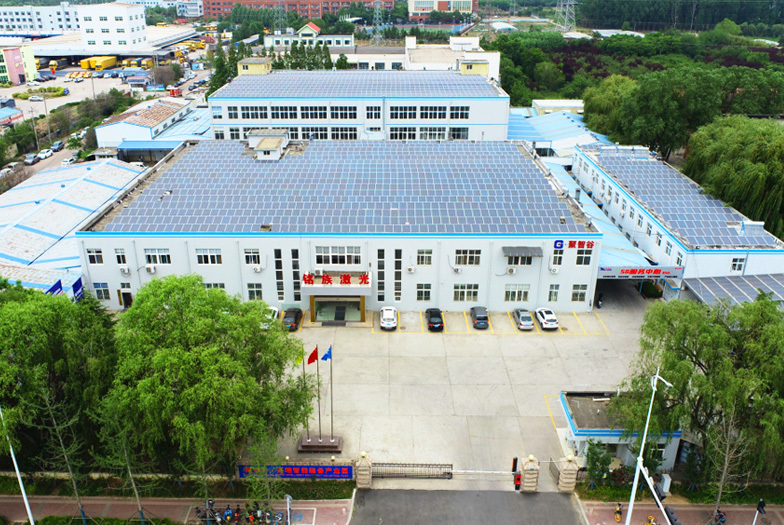
About UsEstablished in 2010, it is the first independent laser brand in Qingdao to integrate research and development, production, and sales of laser equipment.
 КонтактыТелефон службы:+86-400-9988-709
Почтовый ящик:Leo@qdmingzu.com
Почтовый ящик:Info@qdmingzu.com
Адрес:улица Янъян, 97, район Ченьян, Циндао -
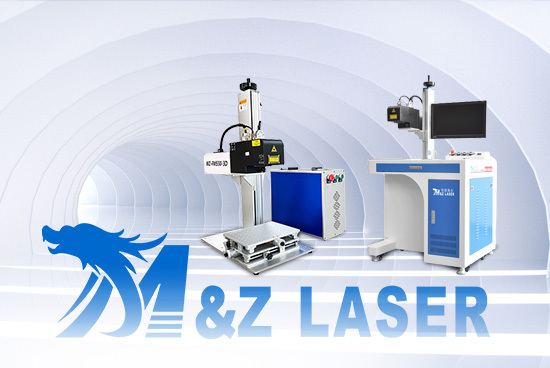
ProductsEstablished in 2010, it is the first independent laser brand in Qingdao to integrate research and development, production, and sales of laser equipment.
 КонтактыТелефон службы:+86-400-9988-709
Почтовый ящик:Leo@qdmingzu.com
Почтовый ящик:Info@qdmingzu.com
Адрес:улица Янъян, 97, район Ченьян, Циндао -
Case CenterEstablished in 2010, it is the first independent laser brand in Qingdao to integrate research and development, production, and sales of laser equipment.
 КонтактыТелефон службы:+86-400-9988-709
Почтовый ящик:Leo@qdmingzu.com
Почтовый ящик:Info@qdmingzu.com
Адрес:улица Янъян, 97, район Ченьян, Циндао -
TechnicalEstablished in 2010, it is the first independent laser brand in Qingdao to integrate research and development, production, and sales of laser equipment.
 КонтактыТелефон службы:+86-400-9988-709
Почтовый ящик:Leo@qdmingzu.com
Почтовый ящик:Info@qdmingzu.com
Адрес:улица Янъян, 97, район Ченьян, Циндао -
NewsEstablished in 2010, it is the first independent laser brand in Qingdao to integrate research and development, production, and sales of laser equipment.
 КонтактыТелефон службы:+86-400-9988-709
Почтовый ящик:Leo@qdmingzu.com
Почтовый ящик:Info@qdmingzu.com
Адрес:улица Янъян, 97, район Ченьян, Циндао

Mingzu’s handheld laser welder is specially designed to handle all “difficult-to-weld” materials: stainless steel, aluminum alloy, and galvanized sheet—no problem!
Release time:
2026-04-17
In the metalworking industry, there has long been a persistent “hard-to-solve” problem that plagues frontline welders and factory owners: certain materials are simply not “easy to weld.”
Galvanized steel sheets explode on the first weld, with spatter causing injuries; aluminum alloys heat up quickly and cool down even faster, collapsing if not properly controlled; thin stainless-steel sheets warp at the slightest excess heat, twisting and contorting like “paper”; and welding dissimilar metals is a challenge that has driven countless seasoned technicians to despair.
Is there really no single welding method that can handle all these difficult-to-weld materials?
The answer is: Yes. A handheld laser welding machine is currently being used. Unmatched aspect ratio and Precise thermal control Turning one “welding no-go zone” after another into a “comfort zone.”
01 Unmatched Aspect Ratio: The “Dimension-Reducing Strike” of Laser Welding
To understand why handheld laser welding can “effectively handle all challenging welds,” we must first grasp a core concept— Aspect ratio 。
The depth-to-width ratio, simply put, is the weld’s Ratio of depth to width It directly determines the strength of the weld and the extent of the heat-affected zone in the base metal.
Traditional argon arc welding and shielded metal arc welding are classified as “heat-conduction welding.” Heat gradually conducts from the material’s surface inward, much like searing a steak over high heat—by the time the surface is nearly charred, the interior may still be undercooked. With this welding method, the weld seam Wide and shallow The depth-to-width ratio is typically around 0.5, meaning a 1 mm-wide weld is only 0.5 mm deep. -8。
Laser welding, by contrast, is entirely different. Its energy density can reach 10⁶–10⁷ W/cm² , which is thousands of times that of conventional arc welding. -2 . The high energy instantly vaporizes the metal, forming an elongated “keyhole” in the molten pool. The laser beam passes through this small hole and directly impinges on the root of the weld, thereby achieving A instantaneous penetration from top to bottom -8。
This is akin to piercing stacked sheets of paper with a red-hot, fine steel needle—resulting in complete fusion of the material rather than mere surface adhesion. The depth-to-width ratio in laser welding can reach 5:1, even 10:1 The weld is narrow and deep, with an extremely small heat-affected zone and virtually negligible distortion. -5-8。
It is precisely this “dimension-reducing strike”-like advantage in aspect ratio that enables laser welding to master those “difficult-to-weld materials” that have long intimidated conventional welding processes.
02 Stainless Steel: Thin Sheets Don’t Burn Through, Thick Sheets Don’t Get Through? Laser Solves It in One Go
Stainless steel is one of the most widely used metallic materials, yet it is also one of the most temperamental.
Thin plate (0.5–2 mm) : Traditional GTAW involves high heat input, making thin plates highly susceptible to burn-through and distortion. After welding, the workpiece ends up looking like a wrung-out towel—completely unusable.
Medium-thick plate (3–6 mm) : Traditional welding requires beveling and multi-pass, multi-layer welding, which is not only inefficient but also prone to defects such as lack of fusion and porosity between layers.
The solution for handheld laser welding is “precise heat control.” With highly focused energy and extremely low heat input, it is ideal for welding thin sheets. Deformation reduced by more than 80% , and even eliminates the need for subsequent leveling. -5 . For medium- and thick plates, the laser beam can achieve Single-sided welding with double-sided formation , complete penetration can be achieved in a single weld pass, with a smooth and flat root face, and the non-destructive testing pass rate can reach 100%. -9。
After welding, the weld appearance is aesthetically pleasing, exhibiting a silvery-white or pale yellow color. Essentially no polishing required. , proceed directly to the next process step -7 No wonder some people say: once you’ve used laser welding for stainless steel, there’s no going back.
03 Aluminum Alloys: Highly Reflective Materials + Thermal Sensitivity? Lasers Conquer Them Head-On with “Deep Penetration Welding”
Aluminum alloys are notoriously “difficult to handle.”
First, High reflectivity . In conventional welding, most of the energy is reflected back, resulting in low efficiency and high energy consumption. Secondly, Fast heat conduction . The thermal conductivity of aluminum alloy is 5 to 10 times that of stainless steel, resulting in rapid heat dissipation and necessitating a higher heat input. Thirdly, Heat-sensitive Too much heat input causes collapse and distortion, while insufficient heat input results in incomplete penetration.
The high energy density of handheld laser welding is precisely what “tames” aluminum alloys. The laser beam’s energy is sufficient to overcome aluminum’s reflective properties, enabling stable welding. The keyhole structure formed by the deep-penetration welding effect ensures that heat is delivered directly to the root of the weld, Aluminum alloy plates 3–6 mm thick can be fully penetrated in a single pass. , no need for multi-layer, multi-pass welding -5。
Notably, laser welding of aluminum alloys results in an extremely narrow heat-affected zone, minimizing degradation of material properties. In high-demand applications such as high-speed railways and maglev trains, laser welding of aluminum alloys has already been successfully implemented. 100% flaw detection pass rate , the weld strength even exceeds that of the base material itself. -9。

04 Galvanized Sheet: From “Explodes at the First Weld” to “Handling with Ease”
Among all materials that are difficult to weld, galvanized sheet steel is perhaps the most challenging for welders.
Zinc has a melting point of only 419°C , whereas the melting point of steel is 1500℃ That concludes the discussion. During conventional welding, the high temperature instantly vaporizes the galvanized coating, and since the resulting zinc vapor has nowhere to escape, it accumulates in the weld pool. Severe bumping and splashing In mild cases, the weld seam is riddled with porosity; in severe cases, the welder may suffer burns.
This is almost the “inevitable fate” of galvanized sheet welding.
Handheld laser welding, with its “high-speed welding + precise heat control” characteristics, has broken this fate. The welding speed is that of traditional welding. 3 to 10 times , the heat input time is extremely short, minimizing the vaporization range of the galvanized layer. Meanwhile, the keyhole formed during laser deep-penetration welding provides a pathway for zinc vapor to escape. Smooth escape route , preventing bumping and splashing -1-3。
Research data indicate that, when welding dissimilar materials—0.5-mm-thick galvanized copper and nickel-plated copper—combining laser power modulation can effectively eliminate porosity and spatter, resulting in Defect-free weld -3。
05 Copper, dissimilar metals, composite materials… the laser’s “all-round” capability
In addition to the three common materials mentioned above, handheld laser welding has also demonstrated its capabilities when tackling even more challenging, “hard-to-weld” materials.
Copper material : Copper exhibits superior thermal conductivity and reflectivity compared with aluminum, making conventional welding extremely challenging. High-power laser welding combined with oscillating-beam welding technology can stably melt copper materials, enabling robust joint formation. -1-4。
Dissimilar metals : Stainless steel and aluminum alloy, copper and steel, copper and aluminum… the melting points and thermal conductivities of these dissimilar materials vary dramatically, making brittle intermetallic compounds极易 form during conventional welding. Laser welding’s precise thermal control and beam oscillation technology can Maximally suppress the formation of brittle phases. , achieve a reliable connection -3-6。
Composite Materials/Multilayer Structures : For example, SIGMACLAD five-layer composite metal material (nickel-stainless steel-copper-stainless steel-nickel), laser welding of Dynamic Power Modulation The function can stabilize the molten pool, eliminate porosity, and achieve a 100% first-pass yield. -3。
06 It’s not just about “being able to weld”—it’s about welding well.
One might ask: Given that laser welding can join so many different materials, just how good is the weld quality?
Let’s let the data speak:
Welding speed : is for traditional argon arc welding 3 to 10 times -4-7
Heat-affected zone : shrink More than 50% , the deformation is almost zero. -5
Weld strength : Brought about by the deep-penetration welding effect Full Penetration Weld , with tensile and flexural strength far exceeding that of conventional welding -8
Flaw Detection Pass Rate : Can be achieved in the high-end manufacturing sector 100%-9
Follow-up handling : The weld seam is smooth and aesthetically pleasing, No sanding required or only light sanding -7
More importantly, these advantages are not merely “laboratory data”; they have already been demonstrated in fields such as high-speed rail, maglev transportation, new-energy vehicles, and aerospace. Batch Verification the result -3-9。
“Specializing in welding even the most challenging materials” is not just a slogan—it’s a reputation earned through the proven performance of handheld laser welders.
Stainless steel, aluminum alloy, galvanized sheet, copper, dissimilar metals—materials that once struck fear into the hearts of welders—are now all readily and precisely welded under the laser’s exacting control. Behind this remarkable transformation lies laser welding. Unmatched aspect ratio and Ultimate heat control capability Supporting.
If you’re still struggling with distortion when welding thin stainless steel sheets, dealing with spatter when welding galvanized steel, or worrying about incomplete penetration when welding aluminum alloys—perhaps handheld laser welding is the “universal solution” you’ve been waiting for.
One welding gun does it all. This isn’t a myth—it’s the power of technology.

Tiktok QR code
Service Phone:+86-400-9988-709
Address: No.97 YanYang Road, ChengYang District, Qingdao City
COPYRIGHT © 2023 MINGZU LASER TECH CO.,LTD ALL RIGHTS RESERVED